Emergency RadiosChecklist
Family Emergency Communication Plan: Step-by-Step Template
A step-by-step guide to creating a family emergency communication plan with a printable template, out-of-state contact strategy, meeting points, and emergency radio recommendations.
By Editorial Team4 min read
Affiliate Disclosure: This article contains affiliate links. We may earn a commission if you purchase through these links, at no extra cost to you. Our editorial recommendations are independent of these partnerships. Learn about our editorial standards.
Key Takeaways
- 1Designate an out-of-state contact as your family rally point — local lines jam but long-distance often works
- 2Text messages use less bandwidth than calls and are more likely to go through during network congestion
- 3Print wallet-sized contact cards for every family member — phones die but paper survives
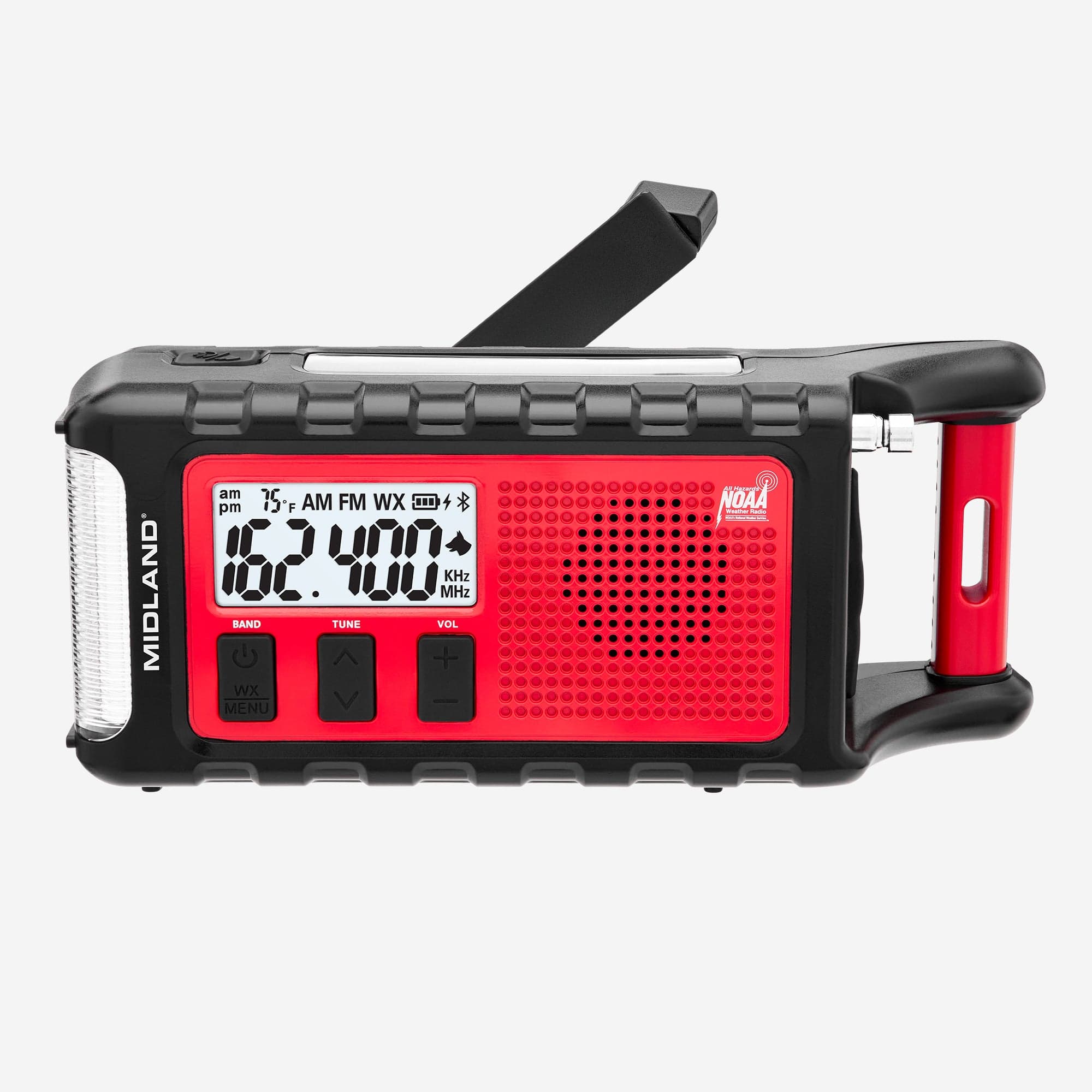
- 4A Midland ER310 NOAA radio ($39) provides emergency alerts when cell networks and internet are down

Introduction
When an emergency happens, cell networks are among the first systems to fail or become overwhelmed. During the 2021 Texas winter storm, the 2023 Maui wildfires, and Winter Storm Fern in January 2026, cell towers went down, circuits became congested, and families who hadn't made an offline communication plan found themselves cut off.
Volt Typhoon — the China-linked threat actor that CISA and the FBI confirmed had embedded in US utility infrastructure, including communications systems — has made this risk even more concrete. These are not hypothetical threats; they're documented, active ones.
A family emergency communication plan doesn't require technical expertise or expensive equipment. It requires about 30 minutes to set up, a printed card in every wallet, and agreement on a few key decisions before an emergency occurs.
Key Takeaways
- Don't rely solely on cell phones during an emergency — circuits congest quickly and towers lose power.
- Designate one out-of-state contact as your family's central communication hub.
- Establish two meeting points: one near your home and one outside your neighborhood.
- An emergency radio is the most reliable information source when internet and cell service fail.
- Complete and print your family communication card now — before you need it.
Why Your Phone May Not Work When You Need It Most
Cell networks are engineered for normal usage loads. During a large-scale emergency, call volume can spike by 400–600%, saturating the network. Cell towers run on backup batteries — typically 4–8 hours. As of 2025, fewer than 30% of US cell towers have generator backup beyond 8 hours.
Text messages (SMS) require significantly less bandwidth than voice calls and often get through when calls cannot. But even SMS can queue and delay for hours during severe disruptions.
When Cell Phones Work Better During Emergencies
- Text over voice: SMS uses less network capacity and is more likely to go through during congestion.
- Wi-Fi calling: If cell service is down but you have internet, Wi-Fi calling can work without cellular signal.
- Landlines: Traditional copper landlines have their own power source and often work when both cell service and internet are down.
Step 1: Gather Your Family's Complete Contact Information
- Full name and date of birth for every household member
- Cell phone numbers for every adult and older child
- Home address and any secondary addresses
- Medical information: blood types, medications, allergies, and conditions affecting emergency response
- Insurance card numbers (health, home, auto)
- Pet information: microchip numbers, vet contact, special medical needs
Don't Store This Only on Your Phone
A communication plan that lives exclusively on your smartphone fails the moment your phone battery dies, your phone is lost, or cellular networks go down. Print two copies: one for your home (on the refrigerator or in a designated emergency folder) and one wallet-sized card for every adult family member. Laminate the wallet card or store it in a waterproof sleeve.
Step 2: Designate an Out-of-State Contact
This is the single most important decision in your communication plan. During a regional disaster, local phone circuits saturate rapidly. It is often easier to reach someone outside the disaster area than across town. The American Red Cross and FEMA both recommend designating one out-of-state contact as your family's communication hub.
- Pick someone reliable, calm under pressure, and likely to be reachable during a daytime emergency
- Tell them in advance that they are your emergency contact
- Make sure they have every family member's cell number, workplace/school address, and medical summary
- Update them whenever family contact information changes
Step 3: Establish Two Meeting Points
If family members are separated during an emergency, you need pre-agreed locations where everyone knows to go without needing to communicate first.
Meeting Point 1: Near Your Home — Choose a location within easy walking distance. Common choices: a neighbor's house, a nearby church or community center, or a corner intersection.
Meeting Point 2: Outside Your Neighborhood — In case evacuation is required. This might be a school, a fire station in an adjacent neighborhood, or a well-known civic building several miles away.
Practice the Route
Drive or walk both meeting point routes with your family at least once. Children especially benefit from a practice run — knowing where to go without being told reduces panic and improves outcomes.
Step 4: Map Your Communication Methods by Scenario
- House fire / local emergency: Call 911 immediately; meet at Point 1
- Extended power outage: SMS to out-of-state contact; emergency radio for information
- Major storm / hurricane: SMS to out-of-state contact; check in 2x/day; emergency radio
- Cyberattack / network disruption: Emergency radio for information; in-person meeting at Point 2
- Evacuation order: Meet at Point 2 if separated; call out-of-state contact
- Child separated from parent: Child calls both parents, then out-of-state contact
Step 5: Create Your Printed Communication Card
Printable Family Emergency Communication Card
Your printed card should include: Home address, Out-of-state contact (name + phone), each family member (name + cell + daytime location), Meeting Point 1 (near home), Meeting Point 2 (outside neighborhood), and important numbers (Poison Control: 1-800-222-1222, FEMA: 1-800-621-3362, local emergency management). Print, laminate, and carry in wallet. Store a copy in your vehicle.
Emergency Radios: The Missing Piece
Cell phones, internet, and even landlines can all fail simultaneously during a major grid event or cyberattack. An emergency radio gives you reliable one-way information when all two-way communication is down.
Emergency Radios for Family Communication
| Feature | |||
|---|---|---|---|
| Price | ~$60 | ~$90 | ~$45 |
| Power Sources | Solar, crank, battery, USB | Solar, crank, battery, USB | Solar, crank, battery, USB |
| NOAA Alert | Yes (S.A.M.E. county-level alerts) | Yes | Yes |
| Key Feature | 2,000 mAh power bank for phone charging | Bluetooth speaker + LED flashlight | 5-way power source; AM/FM/SW/NOAA |
| Best For | Most families — best value | Tech-forward users, multipurpose use | Budget-conscious buyers, secondary radio |
Midland ER310
~$60
- Power Sources
- Solar, crank, battery, USB
- NOAA Alert
- Yes (S.A.M.E. county-level alerts)
- Key Feature
- 2,000 mAh power bank for phone charging
- Best For
- Most families — best value
Eton FRX5-BT
~$90
- Power Sources
- Solar, crank, battery, USB
- NOAA Alert
- Yes
- Key Feature
- Bluetooth speaker + LED flashlight
- Best For
- Tech-forward users, multipurpose use
Kaito KA500
~$45
- Power Sources
- Solar, crank, battery, USB
- NOAA Alert
- Yes
- Key Feature
- 5-way power source; AM/FM/SW/NOAA
- Best For
- Budget-conscious buyers, secondary radio
The Midland ER310 is our top pick because of its S.A.M.E. alert system — it alerts only for emergencies in your county. The Eton FRX5-BT adds Bluetooth speaker functionality. The Kaito KA500 is a budget-friendly backup for your car or secondary emergency bag.
Your Complete Emergency Communication Plan Checklist
- Out-of-state contact designated and informed
- All family members have the contact number memorized
- Every adult carries a laminated communication card
- Children know their home address and parents' cell numbers from memory
- Near-home meeting point agreed and practiced
- Outside-neighborhood meeting point agreed and practiced
- "I'm OK" text format agreed and shared with all family members
- Check-in frequency during extended emergency agreed (e.g., every 12 hours)
- At least one NOAA-capable emergency radio in the home, tested and functional
- Plan reviewed and updated annually
Frequently Asked Questions
What's the most important part of a family emergency communication plan?
The out-of-state contact. Research from FEMA and the Red Cross consistently shows that families who designate a central out-of-state contact have significantly better communication outcomes during regional disasters.
Should children memorize their parents' phone numbers?
Yes — and this is increasingly important as children's contact lists live entirely in their smartphones. If a child's phone is lost or dead, they need to call from any phone. Make memorizing two phone numbers a household requirement.
How often should I update my family emergency communication plan?
At minimum, review annually. Important triggers for immediate updates: a family member changes their cell number, a child changes schools, you move homes, or the out-of-state contact changes their number.
Frequently Asked Questions
Bottom Line
A family emergency communication plan takes 30 minutes to create and costs almost nothing. You need a printed card in your wallet, an agreed meeting point, an out-of-state contact, and an emergency radio that works without the internet.
Start with the communication card template above. Finish it this week.
family emergency communication plan templateemergency communication plan familyemergency contact templateout of state contact emergencyFEMA communication planemergency radio preparednessfamily meeting place emergencycyberattack communication plan
Where to Buy
We may earn a commission when you purchase through these links, at no extra cost to you. This supports our independent research.
Related Articles
Emergency Radios
Comparison
Best Emergency Radios for 2026: NOAA, HAM, and Satellite Options
Our 2026 review of the 5 best emergency radios for home and family use — NOAA reception, S.A.M.E. alerts, power sources, and honest pros/cons compared.
Read more →
Pillar
Best Emergency Radio for 2026
The top 5 emergency radios compared: Midland ER310, Kaito KA500, Eton FRX5-BT, RunningSnail, and Sangean MMR-88. Find the best NOAA weather radio for your emergency kit.
Read more →