Solar GeneratorsComparison
Best Portable Power Stations for Home Emergencies (2026 Review)
Our hands-on comparison of the 5 best portable power stations for 2026 home emergencies — capacity, charge speed, and real-world runtime compared.
By Editorial Team4 min read
Affiliate Disclosure: This article contains affiliate links. We may earn a commission if you purchase through these links, at no extra cost to you. Our editorial recommendations are independent of these partnerships. Learn about our editorial standards.
Key Takeaways
- 1EcoFlow Delta 2 Max ($2,099) is best overall — 2,048Wh capacity, 43-min fast charge, and expandable to 6,144Wh
- 2Jackery Explorer 1000 Plus ($1,299) is best value — lightest in class at 31.5 lbs with 4,000+ cycle battery
- 3Anker SOLIX C1000 ($999) is best budget option — excellent build quality with 1,056Wh at under $1,000
- 4All top picks use LiFePO4 batteries — expect 3,000-4,000 cycles (10+ years) before capacity degrades
- 5Look for UPS mode (<20ms switchover) to keep fridges and medical devices running seamlessly during outages
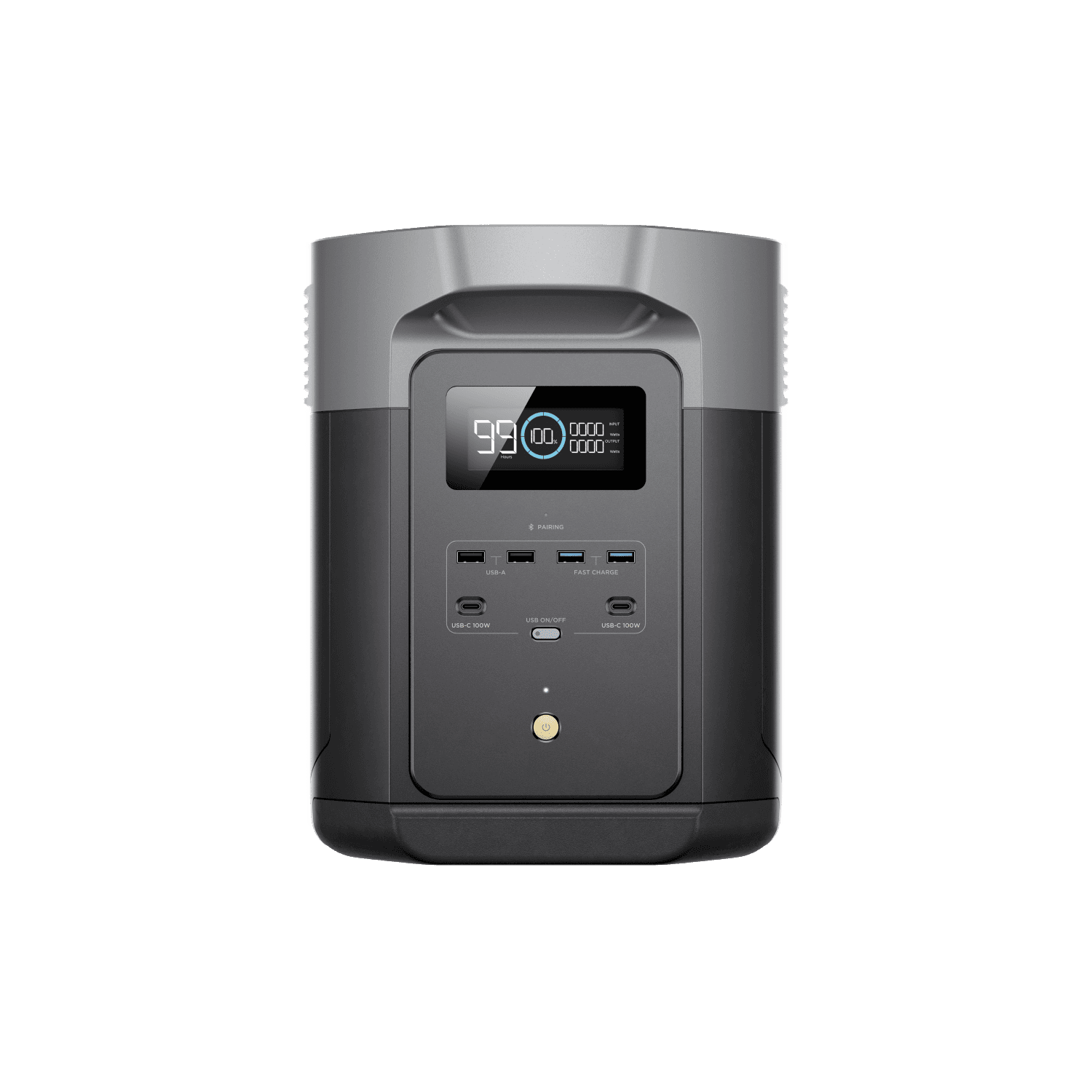
Best Portable Power Stations for Home Emergencies (2026 Review)
The North American Electric Reliability Corporation's 2026 reliability forecast puts more than a dozen US states at elevated risk of power shortfalls during peak demand periods. For most suburban families, the right response isn't a whole-home generator. It's a portable power station — a large-capacity lithium battery pack you can charge from the grid, a solar panel, or your car, then use to run essentials during an outage.
This review covers five of the most capable units on the market right now. We've evaluated them on capacity, output power, charging speed, portability, and real-world value for home emergency use.
Key Takeaways
- For most families, a unit with 1,000–2,000Wh capacity and 1,500W+ output covers the essentials during a 12–24 hour outage.
- The EcoFlow Delta 2 Max is our top pick: best balance of capacity, speed, and expandability for the price.
- The Bluetti AC200MAX is the upgrade pick for high-wattage appliances like a window AC unit.
- The Anker SOLIX C1000 offers the fastest solar charging in this group.
- Goal Zero Yeti 1000X is the most ecosystem-mature option for outdoor-oriented families.
- Avoid units under 500Wh if you want to run a refrigerator for more than a few hours.
How We Evaluated These Power Stations
We evaluated each unit against the real demands of a home power outage: running a 16 cu ft refrigerator (estimated draw: 150W average), charging phones and laptops, powering a CPAP machine, and running a box fan overnight.
- Usable capacity — real-world output at continuous load vs. rated Wh
- Output power — continuous wattage, with surge ratings for compressors and motors
- Charge speed — AC wall charge time to 80% and 100%; solar input max
- Portability — weight, handle design, dimensions
- Expandability — can you add battery modules or solar panels?
- App ecosystem — remote monitoring, charging schedules, firmware updates
- Price per Wh — value calculation at current retail pricing
Quick Comparison: Top Portable Power Stations
Top 5 Portable Power Stations (2026)
| Feature | |||||
|---|---|---|---|---|---|
| Price | $1,499 | $1,699 | $999 | $999 | $1,199 |
| Capacity | 2,048Wh | 2,048Wh | 1,264Wh | 1,056Wh | 983Wh |
| AC Output | 2,400W | 2,200W | 2,000W | 1,800W | 2,000W |
| Charge to 80% | 43 min | ~90 min | 60 min | 58 min (solar) | ~3 hr |
| Best For | Most families | High-wattage loads | Budget-conscious buyers | Solar-first users | Goal Zero ecosystem users |
EcoFlow Delta 2 Max
$1,499
- Capacity
- 2,048Wh
- AC Output
- 2,400W
- Charge to 80%
- 43 min
- Best For
- Most families
Bluetti AC200MAX
$1,699
- Capacity
- 2,048Wh
- AC Output
- 2,200W
- Charge to 80%
- ~90 min
- Best For
- High-wattage loads
Jackery Explorer 1000 Plus
$999
- Capacity
- 1,264Wh
- AC Output
- 2,000W
- Charge to 80%
- 60 min
- Best For
- Budget-conscious buyers
Anker SOLIX C1000
$999
- Capacity
- 1,056Wh
- AC Output
- 1,800W
- Charge to 80%
- 58 min (solar)
- Best For
- Solar-first users
Goal Zero Yeti 1000X
$1,199
- Capacity
- 983Wh
- AC Output
- 2,000W
- Charge to 80%
- ~3 hr
- Best For
- Goal Zero ecosystem users
Our Top Pick: EcoFlow Delta 2 Max
The EcoFlow Delta 2 Max sits at the intersection of enough capacity, enough output power, and a charge speed that's genuinely useful in emergencies. At 2,048Wh, it can run a 16 cu ft refrigerator for roughly 13 hours or keep a CPAP running for 20+ hours.
EcoFlow's X-Stream charging fills the Delta 2 Max from 0 to 80% in approximately 43 minutes from a standard 120V outlet — far faster than most competitors. It also accepts up to 1,000W of solar input and expands to 4,096Wh with an add-on battery.
EcoFlow Delta 2 Max
Pros
- Industry-leading X-Stream charging: 0–80% in ~43 minutes via AC
- 2,048Wh capacity with expandability to 4,096Wh via expansion battery
- 2,400W continuous AC output handles nearly any household appliance
- 1,000W solar input max; compatible with most third-party panels
- Strong app ecosystem with remote monitoring and real-time load tracking
- 5-year warranty (industry-leading for this category)
Cons
- 48 lbs — heavy for solo movement during an emergency
- Premium price (~$1,499) compared to similar-capacity competitors
- Solar panels sold separately; full solar charging kit adds significant cost
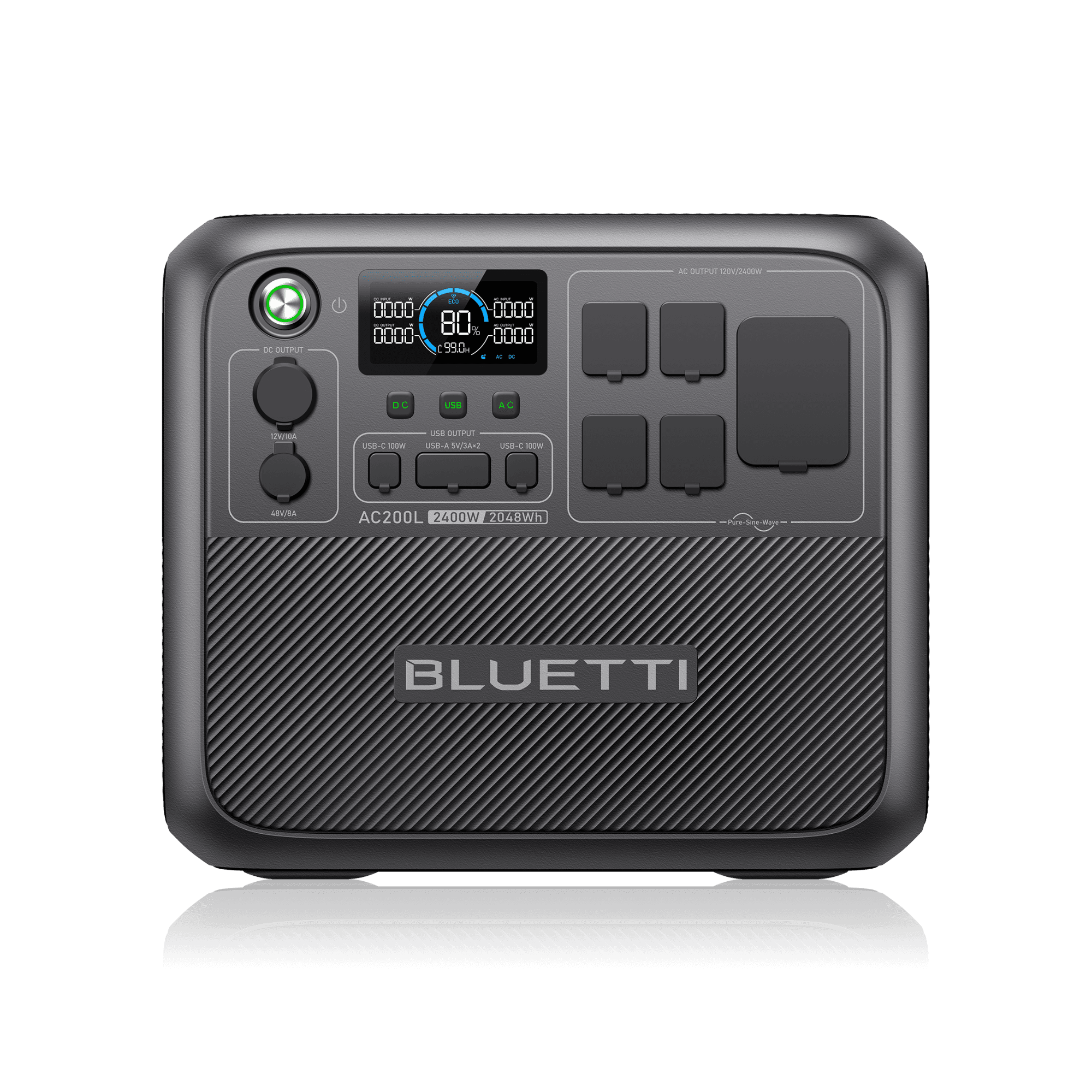
Upgrade Pick: Bluetti AC200MAX
The Bluetti AC200MAX is the power station to consider if you need to run high-wattage loads — window air conditioners, electric skillets, or power tools drawing 1,500–2,000W continuously.
The AC200MAX matches the Delta 2 Max in capacity (2,048Wh) and supports battery expansion up to 8,192Wh — among the highest in the portable segment. AC charging takes ~90 minutes to 80%, slower than EcoFlow but acceptable for planned use.
Bluetti AC200MAX
Pros
- 4,800W surge capacity handles compressor motors and power tools reliably
- Expandable to 8,192Wh — highest expandability in this comparison
- Dual MPPT controllers allow simultaneous solar input from two arrays
- 900W max solar input; compatible with third-party panels
- Wheels and telescoping handle make movement manageable despite 61 lb weight
Cons
- Slower AC charging (~90 min to 80%) vs. EcoFlow Delta 2 Max (~43 min)
- Heaviest unit in this comparison at ~61 lbs
- Higher upfront cost than competitors at similar base capacity
- App connectivity (Wi-Fi) has reported reliability issues
Best Mid-Range: Jackery Explorer 1000 Plus
The Jackery Explorer 1000 Plus is the right answer for families who want meaningful emergency power without spending $1,500+. At 1,264Wh and ~$999, it delivers more capacity per dollar than most alternatives.
It features a 2,000W AC output and LFP cells rated for 2,000 charge cycles. Charging to 80% via AC takes ~60 minutes. At 32 lbs, it is notably lighter than the EcoFlow and Bluetti options.
Jackery Explorer 1000 Plus
Pros
- Best price-per-Wh in this comparison at ~$999 street price
- LFP chemistry: 2,000 cycles vs. ~500–800 for NMC competitors
- 2,000W continuous AC output — significant upgrade over prior models
- Lighter at ~32 lbs; easier to reposition
- Well-established brand with broad US retail availability
Cons
- 1,264Wh capacity is noticeably less than 2,048Wh competitors
- No battery expandability — what you buy is what you get
- 800W max solar input (lower than EcoFlow's 1,000W)
- App is functional but less full-featured than EcoFlow's ecosystem
Fastest Solar Charging: Anker SOLIX C1000
The Anker SOLIX C1000 makes a strong case for solar-first households. Its dual-panel solar input accepts up to 600W simultaneously, reaching 80% from solar in approximately 1.5 to 2 hours on a clear day.
Solar Charging Reality Check
Solar panel output ratings assume ideal conditions: direct full sun, optimal panel angle, and cooler temperatures. In real-world use, expect 60–75% of rated output. A 600W solar input rating translates to roughly 360–450W of actual sustained charging during a typical sunny day.
Anker SOLIX C1000
Pros
- Fastest solar charging: up to 600W input, 80% in ~1.5–2 hrs from solar
- Fast AC charging: ~58 min to 80% from wall outlet
- Lightest unit in comparison at ~27 lbs — easiest to move
- Competitive price (~$999) with Anker's above-average build quality
- Anker's 5-year warranty (best-in-class coverage)
Cons
- Lowest capacity in comparison at 1,056Wh
- No battery expansion option currently available
- 1,800W continuous output is slightly lower than competitors
- Anker SOLIX ecosystem is newer; shorter long-term track record
Best Ecosystem: Goal Zero Yeti 1000X
The Goal Zero Yeti 1000X is the veteran in this roundup. Goal Zero has been building portable power stations longer than any other brand here, and the Yeti 1000X reflects years of refinement.
Where it earns its spot is reliability and ecosystem depth. If you already own Nomad or Boulder solar panels from Goal Zero, they connect directly and work seamlessly. US-based customer service is consistently rated among the best.
Goal Zero Yeti 1000X
Pros
- Most mature product ecosystem: broadest compatibility with solar panels and accessories
- Excellent build quality with proven multi-year reliability track record
- 2,000W AC output handles most home essentials reliably
- US-based customer service rated among best in category
- 5-year warranty covers cells and inverter
Cons
- Slowest AC charging in this group (~2.5–3 hrs to 80%)
- Lowest base capacity (983Wh) at the highest per-Wh price
- Limited expansion (Tank module only, up to 1,516Wh total)
- Less competitive value for new buyers not in the Goal Zero ecosystem
Head-to-Head: Detailed Comparison
Detailed Specs Comparison
| Feature | |||||
|---|---|---|---|---|---|
| Price | $1,499 | $1,699 | $999 | $999 | $1,199 |
| Capacity | 2,048Wh | 2,048Wh | 1,264Wh | 1,056Wh | 983Wh |
| Cont. Output | 2,400W | 2,200W | 2,000W | 1,800W | 2,000W |
| Surge | 5,000W | 4,800W | 4,000W | 2,400W | 3,600W |
| AC Charge (0-80%) | ~43 min | ~90 min | ~60 min | ~58 min | ~2.5–3 hr |
| Solar Input Max | 1,000W | 900W | 800W | 600W | 600W |
| Weight | 48 lbs | 61 lbs | 32 lbs | 27 lbs | 30 lbs |
| Expansion | Yes (to 4,096Wh) | Yes (to 8,192Wh) | No | No | Limited |
| Price/Wh | ~$0.73 | ~$0.83 | ~$0.79 | ~$0.95 | ~$1.22 |
EcoFlow Delta 2 Max
$1,499
- Capacity
- 2,048Wh
- Cont. Output
- 2,400W
- Surge
- 5,000W
- AC Charge (0-80%)
- ~43 min
- Solar Input Max
- 1,000W
- Weight
- 48 lbs
- Expansion
- Yes (to 4,096Wh)
- Price/Wh
- ~$0.73
Bluetti AC200MAX
$1,699
- Capacity
- 2,048Wh
- Cont. Output
- 2,200W
- Surge
- 4,800W
- AC Charge (0-80%)
- ~90 min
- Solar Input Max
- 900W
- Weight
- 61 lbs
- Expansion
- Yes (to 8,192Wh)
- Price/Wh
- ~$0.83
Jackery Explorer 1000 Plus
$999
- Capacity
- 1,264Wh
- Cont. Output
- 2,000W
- Surge
- 4,000W
- AC Charge (0-80%)
- ~60 min
- Solar Input Max
- 800W
- Weight
- 32 lbs
- Expansion
- No
- Price/Wh
- ~$0.79
Anker SOLIX C1000
$999
- Capacity
- 1,056Wh
- Cont. Output
- 1,800W
- Surge
- 2,400W
- AC Charge (0-80%)
- ~58 min
- Solar Input Max
- 600W
- Weight
- 27 lbs
- Expansion
- No
- Price/Wh
- ~$0.95
Goal Zero Yeti 1000X
$1,199
- Capacity
- 983Wh
- Cont. Output
- 2,000W
- Surge
- 3,600W
- AC Charge (0-80%)
- ~2.5–3 hr
- Solar Input Max
- 600W
- Weight
- 30 lbs
- Expansion
- Limited
- Price/Wh
- ~$1.22
How to Choose the Right Size for Your Home
What Can You Run on Each Capacity?
500–750Wh: Phone and laptop charging, LED lights, small fan, CPAP for 1 night
1,000–1,200Wh: Add a 16 cu ft refrigerator for 6–8 hours, or a TV + router + lights for a full evening
2,000–2,500Wh: Refrigerator for 12–15 hours, CPAP for multiple nights, window fan continuously
3,000Wh+: Refrigerator + chest freezer, or add a small window AC unit for a few hours
Your refrigerator is usually your most important load. A modern 16–18 cu ft refrigerator draws 100–200W when the compressor is running, but cycles — average continuous draw is typically 80–150W. At 2,048Wh and 150W average, you're looking at roughly 13 hours of runtime.
Solar recharging is worth planning for if you get more than 4 hours of direct sun per day. Even a 200W panel adds 800–1,000Wh per day in ideal conditions.
What About LFP vs. NMC Batteries?
LFP is more stable, longer-lived (typically 2,000+ cycles vs. 500–800 for NMC), and safer at high temperatures. NMC offers higher energy density, allowing more compact designs. For emergency home use — where the unit sits on a shelf most of the year — prioritize capacity, output, and charging speed over cell chemistry.
Frequently Asked Questions
How long will a 2,000Wh power station run my refrigerator?
A typical 16–18 cu ft refrigerator draws an average of 100–150W when accounting for compressor cycles. At 2,048Wh, expect approximately 12–15 hours of runtime.
Can I charge a portable power station while using it?
Yes — all five units support pass-through charging, meaning you can plug the station into the wall and run devices from it simultaneously.
Is it safe to run a portable power station indoors?
Yes. Unlike gas generators, portable power stations produce no exhaust and can be used safely indoors. They don't require ventilation and won't produce carbon monoxide.
How often should I charge my power station when not in use?
Most manufacturers recommend storing LFP units at 30–50% charge and cycling every 3–6 months. NMC units prefer 50–80% storage. Set a quarterly calendar reminder.
EcoFlow Delta 2 Max
9.2
out of 10Capacity9.5
Output Power9.0
Portability7.0
Recharge Options9.8
Value8.5
Our Verdict
Best overall portable power station. The 43-minute fast charge and expandability make it the top choice for serious home emergency preparedness.
Jackery Explorer 1000 Plus
8.8
out of 10Capacity8.0
Output Power8.0
Portability9.5
Recharge Options8.0
Value9.5
Our Verdict
Best value pick. At 31.5 lbs with 4,000+ cycle battery, it is the most portable and budget-friendly option with excellent longevity.
Anker SOLIX C1000
8.5
out of 10Capacity7.5
Output Power8.0
Portability8.5
Recharge Options8.0
Value9.0
Our Verdict
Best budget entry point under $1,000. Excellent build quality and reliable performance for essential emergency power needs.
Frequently Asked Questions
Bottom Line
The best portable power station 2026 for most families is the EcoFlow Delta 2 Max. Its combination of 2,048Wh capacity, 2,400W output, and class-leading AC charge speed (0–80% in 43 minutes) makes it genuinely useful across the full range of home emergency scenarios.
If budget is the primary constraint, the Jackery Explorer 1000 Plus is an honest, capable alternative at roughly $500 less. The Anker SOLIX C1000 earns consideration if solar recharging is central to your plan.
best portable power station 2026portable power station reviewemergency power backupEcoFlow Delta 2 MaxBluetti AC200MAX
Where to Buy
We may earn a commission when you purchase through these links, at no extra cost to you. This supports our independent research.
Related Articles
Solar Generators
Comparison
Best Solar Generators for Home Backup Power: 2026 Update
We compared the top solar generators for home backup in 2026 — capacity, output, expandability, and value. Picks from EcoFlow, Bluetti, Anker, and Jackery.
Read more →
Solar Generators
Comparison
Solar Generator vs Gas Generator: Which Is Better for Hurricane Season 2026?
Compare solar generators and gas generators for hurricane season 2026 — upfront costs, runtime, safety, and total cost of ownership with our top three solar picks.
Read more →
Solar Generators
Comparison
Best Home Battery Backup Systems: Solar + Storage for Grid Independence (2026)
The top solar + battery backup systems for 2026 compared: capacity, solar input, cost, and IRA tax credit eligibility.
Read more →