Water FiltrationPillar
How to Store Emergency Water: The Complete Family Guide
Learn how to store emergency water safely — how much your family needs, best containers, treatment methods, and rotation schedule. FEMA-backed guidance.
By Editorial Team4 min read
Affiliate Disclosure: This article contains affiliate links. We may earn a commission if you purchase through these links, at no extra cost to you. Our editorial recommendations are independent of these partnerships. Learn about our editorial standards.
Key Takeaways
- 1Store 1 gallon per person per day — FEMA recommends a 3-day minimum, we recommend 14 days (56 gallons for a family of 4)
- 2Use food-grade containers only — never reuse milk jugs (bacteria) or non-food-grade buckets (chemical leaching)
- 3Commercially bottled water lasts indefinitely if sealed — rotate home-stored water every 6-12 months
- 4Pair stored water with a Big Berkey or Sawyer Squeeze filter for ongoing purification when stores run out
Introduction
A few winters ago, Winter Storm Fern left 750,000 households across the Mid-Atlantic and Carolinas without power for an average of 12 or more hours — and in many neighborhoods, water pressure dropped or municipal boil-water advisories went out within 24 hours.
Knowing how to store emergency water isn't complicated — but there are real differences between doing it correctly and just stacking bottles in a closet. This guide covers everything your family needs to build a reliable, safe emergency water supply.
Key Takeaways
- FEMA recommends a minimum of 1 gallon of water per person per day — store at least 3 days, ideally 2 weeks
- A family of four needs a minimum of 12 gallons for 3 days; 56 gallons for 2 weeks
- Use food-grade containers only — never reuse milk jugs, which harbor bacteria
- Tap water treated with plain unscented chlorine bleach (8 drops per gallon) can last up to 6 months
- Rotate your stored water supply every 6–12 months
- Keep a gravity-fed water filter as a backup for treating water from alternative sources
How Much Water Does Your Family Actually Need?
FEMA and the American Red Cross recommend 1 gallon per person per day. But that number covers only drinking and basic sanitation. It does not account for cooking, washing dishes, bathing, or pets. In hot climates, individual consumption can double.
The Real Calculation for Your Household
- Drinking water: 0.5 gallons per adult per day (more in heat or during illness)
- Food preparation: 0.25–0.5 gallons per day for the household
- Basic hygiene (hand washing, sponge bathing): 0.5–1 gallon per person per day
- Pets: 1 ounce per pound of body weight per day
For a family of four with two adults, two children, and a medium-sized dog, a practical estimate is closer to 2–2.5 gallons per day total.
FEMA's Official Guideline
FEMA's Ready.gov recommends storing at least one gallon of water per person per day for at least three days. Individual needs vary based on age, health status, physical condition, activity level, diet, and climate. People with certain medical conditions, nursing mothers, and children may require significantly more.
Best Water Storage Containers for Home
Food-Grade Water Storage Barrels
The most cost-effective solution for a 2-week or longer supply is a dedicated food-grade water storage barrel (30, 55, or 160-gallon sizes). Look for containers made from high-density polyethylene (HDPE) — check for the HDPE #2 recycling symbol. Barrels must be labeled "food grade" and should be opaque to prevent algae growth.
5- and 7-Gallon Water Jugs
Blue food-grade poly jugs in 5 or 7-gallon sizes are the sweet spot for most households. They're stackable, manageable in weight, and easy to rotate. Ideal for storing under beds, in closets, and spaces where 55-gallon barrels won't fit.
What NOT to Use
- Milk jugs — protein residue creates food source for bacteria
- Juice or soda bottles — designed for single use; plastic degrades over time
- Non-food-grade containers — may leach plasticizers or chemicals
- Clear containers stored in sunlight — algae and bacteria grow rapidly
Avoid These Common Mistakes
Never store emergency water in containers that previously held non-food substances. Don't assume any plastic container is food-safe — look for the HDPE #2 symbol. Never store water containers directly on concrete floors, which can leach chemicals through the plastic over time; use pallets or wooden boards.
How to Treat Water for Long-Term Storage
Option 1: Using Unscented Liquid Chlorine Bleach
Use plain, unscented household bleach containing 5.25–8.25% sodium hypochlorite. Dosing: 6% bleach uses 8 drops per gallon; 8.25% bleach uses 6 drops per gallon. Seal and shake gently. Shelf life with treatment: up to 6 months.
Option 2: Commercial Water Preservation Tablets
Products like Aquatabs (sodium dichloroisocyanurate) are convenient for smaller containers or travel kits. Follow dosage on packaging — typically one tablet per liter or gallon.
Option 3: Pre-Treated Commercially Bottled Water
Commercially sealed bottled water is sterile when packaged and generally safe indefinitely. "Best by" dates refer to packaging integrity and taste, not safety. For long-term storage, thicker HDPE containers are preferable to thin PET bottles.
How Long Does Stored Water Last?
- Commercially sealed bottled water: 2+ years (indefinitely if unopened, cool storage)
- Tap water, untreated, in food-grade container: 6–12 months
- Tap water treated with bleach: Up to 6 months
- Water from natural source, filtered + treated: Use within 24–48 hours unless re-treated
- WaterBOB bathtub bladder (tap water): Up to 4 weeks
Building a Water Rotation Schedule
Tie rotation to Daylight Saving Time changes (March and November). Every time the clocks change, spend 30 minutes draining and refilling your water storage containers.
Make Rotation Easy: The Date-Label System
Write the fill date on masking tape attached to each container — not a sticker, which can fall off. Some preppers use a color-coded dot system: red = oldest (rotate next), yellow = mid-cycle, green = newly filled.
Water Storage for Apartments and Small Spaces
- Under-bed storage: 4–6 seven-gallon jugs fit under a standard bed (28–42 gallons)
- Closet floor space: 2 stacked 7-gallon jugs take about as much space as a large shoebox
- Kitchen cabinet bottom shelf: Store 6–8 one-gallon jugs for quick access
- WaterBOB + smaller jugs combination: best approach for apartments
Water Filtration as Your Emergency Backup System
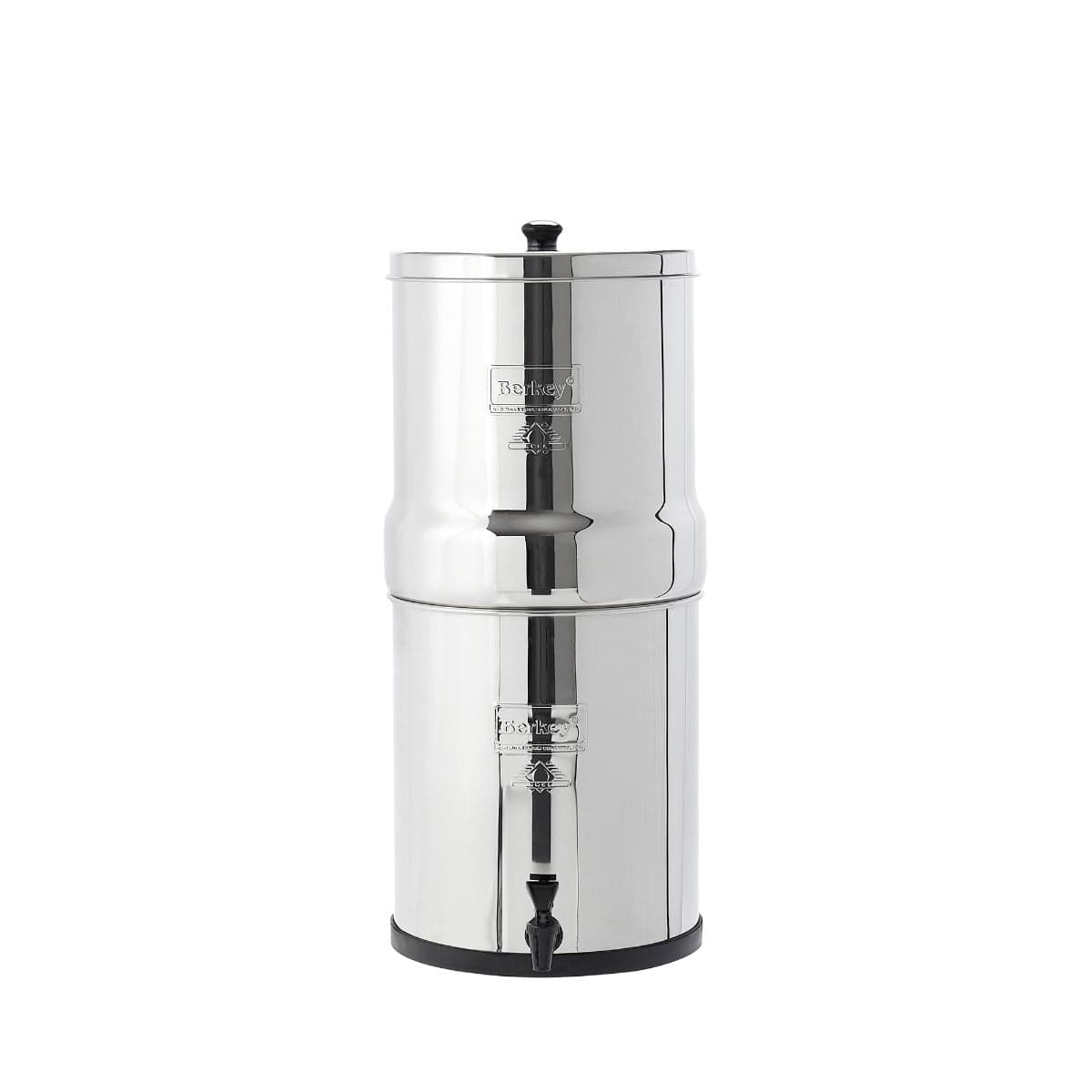
For families, a gravity-fed countertop filter like the Big Berkey or Travel Berkey is the gold standard. They use no electricity, require no pump pressure, and filter bacteria, protozoa, heavy metals, and many chemical contaminants.
For evacuation kits, the Sawyer Squeeze ($35–$40, 100,000-gallon lifetime) and LifeStraw Personal Water Filter are compact, lightweight options for every emergency bag.
What Filters Don't Remove
No portable filter removes everything. Gravity and squeeze filters effectively remove biological contaminants and many chemicals. However, they typically do not remove viruses without additional UV treatment, chemical treatment, or boiling. For flood scenarios involving sewage, add iodine tablets or a UV treatment pen as a second step.
Common Water Storage Mistakes to Avoid
- Storing in direct sunlight or near heat sources — accelerates degradation
- Not labeling your containers with fill dates
- Underestimating pet needs
- Forgetting medications that require water
- Only storing water in one location — distribute across floors
- Assuming bottled water needs no attention — inspect periodically
Frequently Asked Questions
How much water should I store for a family of 4?
FEMA's minimum is 12 gallons for 3 days. For a practical 2-week supply, plan for 56–80 gallons. Add daily water needs for any pets.
Does stored water ever "go bad"?
Water itself doesn't spoil — it's the container and what's in it that matter. Water stored in contaminated containers, exposed to light, or in temperature extremes can develop bacterial growth. Properly treated and stored water doesn't go bad, but loses chlorine effectiveness over time — rotate every 6–12 months.
What's the best water storage container for a small apartment?
Five- or 7-gallon food-grade HDPE jugs offer the best combination of storage efficiency and portability. Six 7-gallon jugs under a bed gives you 42 gallons — enough for two people for about 2.5 weeks.
Frequently Asked Questions
Bottom Line
A reliable emergency water supply comes down to three things: storing enough water in the right containers, treating it properly for shelf life, and rotating it regularly. Start with a 2-week supply and add a gravity filter like the Big Berkey for treating alternative sources. Review your supply twice a year when the clocks change.
how to store emergency wateremergency water storagewater storage containershow long does stored water lastwater purificationFEMA water guidelineswater rotation scheduleapartment water storage
Where to Buy
We may earn a commission when you purchase through these links, at no extra cost to you. This supports our independent research.
Related Articles
Water Filtration
Comparison
Best Water Filters for Emergency Preparedness (2026 Review)
Reviews of the 5 best water filters for emergency preparedness in 2026, covering gravity filters, pump filters, squeeze filters, and purifiers with flow rate and capacity comparison.
Read more →
Water Filtration
Pillar
Best Water Filter for Survival Situations
The definitive guide to survival water filters. We compare Berkey, Sawyer, LifeStraw, Katadyn, and MSR across filtration capability, flow rate, weight, and real-world reliability.
Read more →